
RV travelers rely on portable, consistent electricity for life on the road, and a solar-powered generator is an excellent answer. These generators provide clean, quiet energy without the need for gasoline, fumes, or connections. Whether you’re boondocking in the bush or parked in a distant location, solar power keeps your critical systems working. Unlike gas generators, solar versions recharge with sunshine, making them both environmentally friendly and cost-effective. This tutorial will explain why solar generators are a good alternative for RVers, what they can power inside your vehicle, and how to select a system that meets your power requirements and travel style.

Why Are Solar Powered Generators Ideal for RV Life?
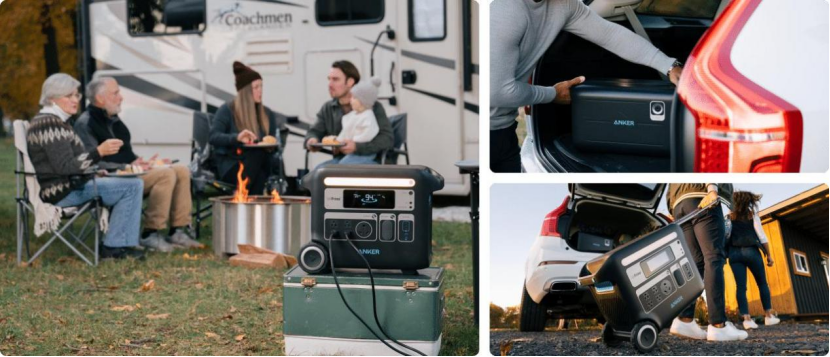
Solar powered generators give RV owners the freedom to travel off-grid without relying on noisy gas generators or crowded campgrounds with shore power. They run quietly, emit no fumes, and require no fuel storage—making them ideal for compact RV spaces. Many models, like the Anker SOLIX F2000 Solar Generator, offer fast recharging, multiple ports, and enough power to handle essential appliances and devices on the road. Whether you’re running lights, charging phones, or powering a fan or small fridge, solar generators deliver clean energy with low maintenance. Their portability and solar compatibility make them perfect for weekend trips, boondocking, or full-time RV life—offering reliable, sustainable power wherever the road takes you.
What Can Portable Solar Generators Power in an RV?
Running RV Appliances Like Fridges, TVs, and Microwaves
Depending on output and battery capacity, a solar power generator can power important RV equipment. RV refrigerators generally need 100-200 watts, whereas flat-screen TVs require 60-150 watts. A properly sized generator can keep both operating for several hours. Microwaves, which consume 800-1,200 watts, need larger capacity versions with robust surge output. Use appliances one at a time to increase battery life, especially on overcast days when recharging is slower. Limiting simultaneous loads minimizes system overload and saves runtime. For basic cooking and entertainment needs, several portable generators with 1,000-2,000Wh power are enough. You can cook, watch TV, and store food off-grid without relying on campsite connections if you manage your resources carefully.
Supporting Climate Control, Fans, and Ventilation
Climate control in an RV doesn’t always require high-powered AC units. A portable solar power generator can efficiently run roof vents, ceiling fans, or 12V circulator fans to keep air flowing. These gadgets frequently utilize less than 50 watts each, enabling prolonged usage even with a small battery. Small space heaters or electric blankets may operate momentarily with higher-output versions, but they quickly deplete energy. Evaporative coolers or energy-efficient fans are preferable cooling solutions to rooftop air conditioning systems, which require big inverters and quick recharging. Ventilation is especially crucial in warm weather or when cooking inside. A correctly sized solar generator maintains ventilation and comfort within your RV while being energy efficient and quiet.
Charging Phones, Laptops, and RV Electronics
Portable solar-powered generators are ideal for charging low-wattage gadgets such as cellphones, tablets, laptops, and Wi-Fi routers. These gadgets generally drain less than 100 watts each, so even a small-capacity generator can handle several charges each day. Use USB and DC connectors directly to reduce inverter loss and extend battery life. For digital nomads or distant workers, solar generators can power monitors, cameras, and mobile hotspots for extended periods of time. Some generators can charge from car DC outlets while driving, ensuring that your setup is fully charged. Whether you’re checking maps, viewing movies, or keeping connected on the road, solar generators provide continuous, clean power for all of your digital needs inside the RV.
How Do You Choose the Right Solar Generator for RV Travel?
Matching Generator Capacity to RV Power Demands
Begin by identifying the equipment and gadgets you want to use and noting their wattage. To calculate overall wattage requirements, multiply each by the predicted daily use hours. A modest setup for lights and phones may require only 300-500. Wh, whereas running a fridge and microwave on a regular basis might consume 1,500-3,000 Wh. Ensure that the solar power generator’s output (in watts) surpasses the total load of all devices utilized at the same time. Check the continuous and surge ratings to prevent tripping the inverter. Choosing the proper capacity leads to longer runtimes and fewer recharges. For most RVers, a mid-size solar generator provides the finest combination of mobility and off-grid power performance.
Solar Panel Setup, Roof vs Portable Panels
Solar panels fuel your generator, so selecting the appropriate type is critical. Roof-mounted panels are ideal for full-time RVers, as they provide continuous charging when traveling or parking. They function best with integrated charge controllers and permanent wiring. Portable panels are perfect for flexibility since they can be tilted toward the sun, relocated for optimal exposure, and stored when not in use. Foldable models save space and are simple to set up at campsites. To charge efficiently, make sure the panel wattage matches your generator’s input rating. Most RV applications are best suited to a 200W-400W solar panel configuration, whether roof-mounted or portable. Continuous sun exposure and precise alignment are essential for keeping your solar generator running during your travels.
Portability, Storage Space, and Travel Convenience
RV life needs small and efficient equipment. Choose a solar-powered generator that is portable but strong enough to suit your energy requirements. To ensure travel durability, look for built-in handles, a tiny footprint, and sturdy construction. Consider storage space: can the generator fit in a cupboard, under a bench, or within a compartment? Some variants use wheels or stacking batteries to increase capacity while maintaining mobility. Consider setup time as well: quick-connect connections and simple displays make things easier. Portability goes beyond weight; it is about how well the generator fits into your RV lifestyle. The greatest solar generator provides convenience, performance, and ease of use while taking up minimal road space.
Conclusion
A portable solar power generator is a dependable, quiet, and environmentally responsible power source for RV travelers. It is compatible with a broad range of appliances and devices, including refrigerators, fans, laptops, and lights, without the noise, fuel, or pollutants associated with gas units. With the correct capacity, solar panel layout, and storage strategy, you may be off-grid for longer while still enjoying contemporary conveniences. Whether you’re boondocking, camping, or traveling full-time, the appropriate solar generator will provide you with clean electricity wherever you go. Smart planning and correct use may transform your RV into a self-sufficient, mobile power center for all of your activities.